

How to style curly hair at home between salon visits
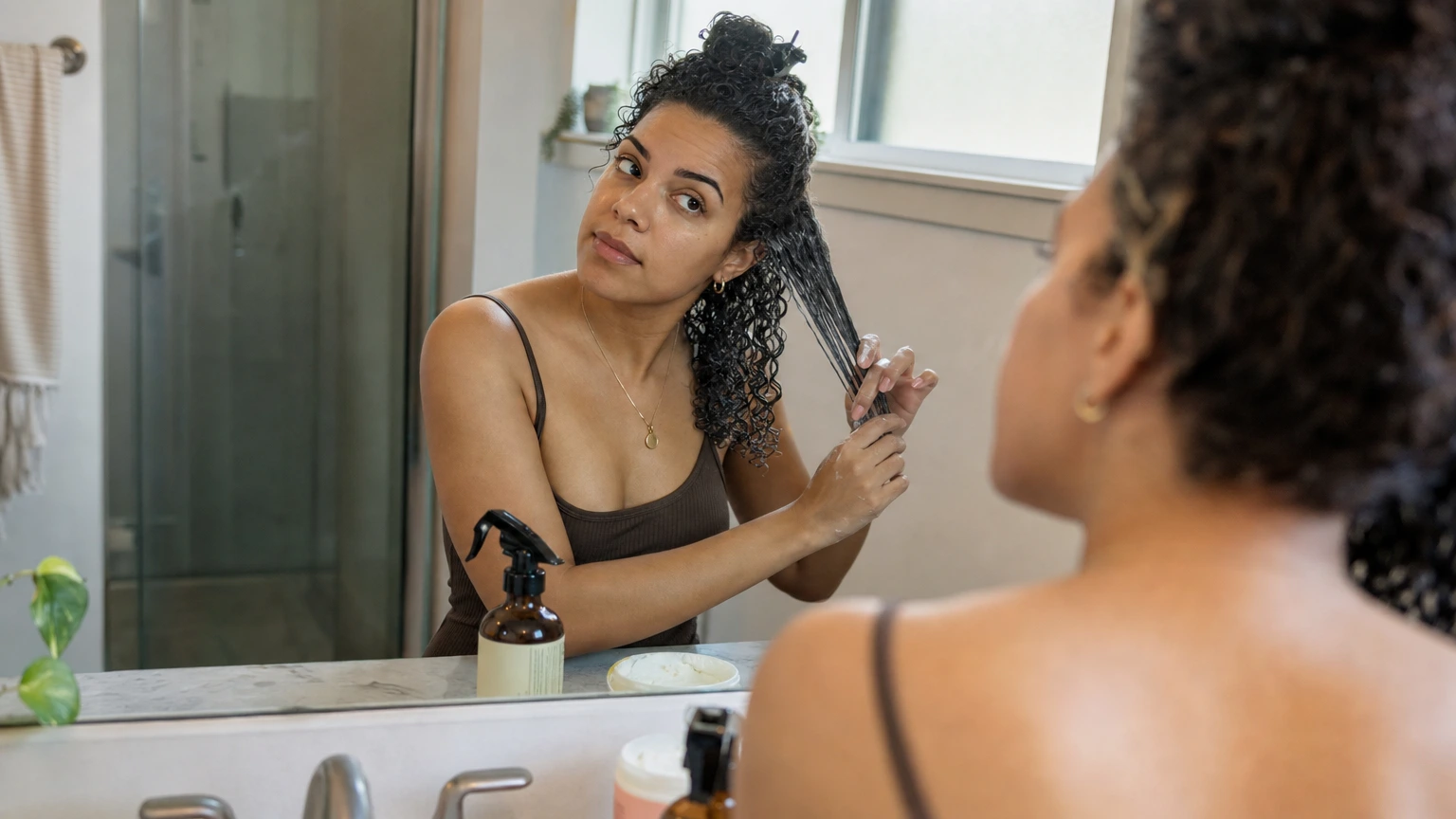
You left the salon. Your curls are defined, bouncy, frizz-free. Three days later, you're staring at flat, tangled sections in the mirror and wondering what went wrong. The cut is still there. The technique the stylist used is not.
Most of the work happens at home. A cut that emphasizes your natural texture only shows up when you know how to prep, apply product, and dry your curls the way they need. This guide walks through the methods curly hair specialists in St. Louis teach in the chair so you can replicate frizz-free results between visits.
Start with soaking wet hair, not damp
Your curls clump best when hair is dripping wet, not damp. After conditioning in the shower, squeeze out excess water with your palms but leave your hair wet enough that water runs down your back when you flip it forward. Damp hair prevents even product distribution, which is why curls that looked perfect in the salon fall flat at home.
If you need more water after stepping out of the shower, mist sections with a spray bottle. The goal is to hear a wet sound when you scrunch product in. That wet sound when you squish your curls means you have enough water to disperse product and help curl clumps form.
Apply products in the right order
The LOC method applies products in a specific order: leave-in conditioner, oil, then cream. The leave-in hydrates, the oil seals moisture in, and the cream defines your curl pattern. Not every curl type needs all three layers. Fine waves can stop at leave-in and mousse. Dense coils often need the full three-step sequence plus gel for hold.
Start with a quarter-sized amount of leave-in conditioner. Rake it through soaking wet hair with your fingers, root to tip. Add a few drops of oil to your palms, rub them together, and smooth over the mid-lengths and ends. Then apply curl cream or gel using the scrunching method.
Cup your curls in both hands and squeeze upwards toward your head. This is scrunching. Repeat until product coats every section. Your hair should feel slightly sticky, not slick. If it slides through your fingers without any grab, you need more product.
Section your hair while applying stylers
Applying products in sections ensures even distribution and helps define individual curls. Clip the top half of your hair up and work through the bottom layer first. Divide that layer into four sections. Apply your styler to each section separately, using the raking or praying hands method.
Raking means running your fingers through each section like a wide-tooth comb. Praying hands involves gliding flat hands over sections of your curls to evenly distribute product without disrupting the curl pattern. Use raking for tighter curls that need definition. Use praying hands for looser waves that need smoothing without separation.
If a clump looks too thick or uneven, separate it gently at the roots. Work from the ends toward the scalp to find where curls naturally divide.
Choose your drying method based on your curl type
Air drying remains the most natural method for setting curls, but if you're short on time, using a diffuser on low heat is a great alternative. Air drying preserves curl definition and prevents heat damage. It takes longer but delivers softer results.
Use a t-shirt or microfiber towel to dry your hair because terrycloth towels are rough on curly hair and create frizz, while t-shirts and microfiber are gentler. After applying product, lay a cotton t-shirt flat on a surface. Flip your hair onto the shirt, gather the fabric around your head, and tie the sleeves at the back of your neck. This is called plopping. Leave it for 10 to 20 minutes to absorb water without disturbing your curl pattern.
If you diffuse, dry on low heat, scrunching curls upward. Hover the diffuser near sections of hair without touching them. Move it in a circular motion to distribute airflow evenly. Stop when your hair is 80 percent dry, then let it finish air drying. Over-drying with heat causes frizz.
Protect curls overnight with the pineapple method
Let your hair dry fully before bed or pulling it back, as Lily recommends. Gather dry hair at the top of your head in a soft scrunchie or hair tie to hold it in a loose bun, and sleep on a silk pillowcase to prevent tangling and frizz. This is the pineapple method. It keeps curl clumps intact while you sleep.
Flip your head forward and gather all your hair at the highest point on your head. Secure it loosely with a silk or satin scrunchie. Don't pull it tight. The goal is to keep curls off your pillow, not to create tension at the roots. In the morning, release the scrunchie, shake your curls loose, and move to the refresh step.
Refresh curls between washes without restyling
Refreshing is a mini reset for your hair without cleansing, reviving definition, reducing frizz, and adding moisture where needed. You don't need to wet your entire head. Focus on the sections that lost shape.
Lightly mist your curls with water using a spray bottle to reactivate leftover products and refresh your curls. Then scrunch in a small amount of leave-in conditioner or curl cream. If curls still hold their shape and need smoothing, use a very small amount of lightweight curl cream or oil, rub it between your palms, and scrunch the product into the ends or frizzy sections.
For flat roots, lift sections at the crown with your fingers or a hair pick. Mist with water and scrunch to restore volume. Avoid touching your hair while it dries. The more you manipulate curls, the more frizz you create.
Know when to clarify and reset your routine
If your curls feel coated, limp, or like nothing is performing the way it should, it may be time to clarify. Product buildup prevents moisture from entering the hair shaft. Even the best stylers stop working when buildup accumulates.
Discuss buildup and clarifying with Lily during your appointment. She recommends avoiding silicones and products that build up on the hair. Use the cleansing and conditioning guidance from your visit rather than applying a fixed monthly schedule to every routine.
After clarifying, your curls reset. This is when you reassess what's working. If your hair feels dry after following these steps, you need more moisture in your routine. If it feels limp or greasy, you need less cream and more hold. Curly hair care in St. Louis means adjusting for humidity in summer and indoor heat in winter. Your routine shifts with the season.
What to do next
If the techniques in this post close the gap between salon day and day three, you're building the foundation. The cut you get matters, but what you do with it at home is what holds. Book a curly hair cut and styling lesson to learn the methods that work for your specific curl pattern.